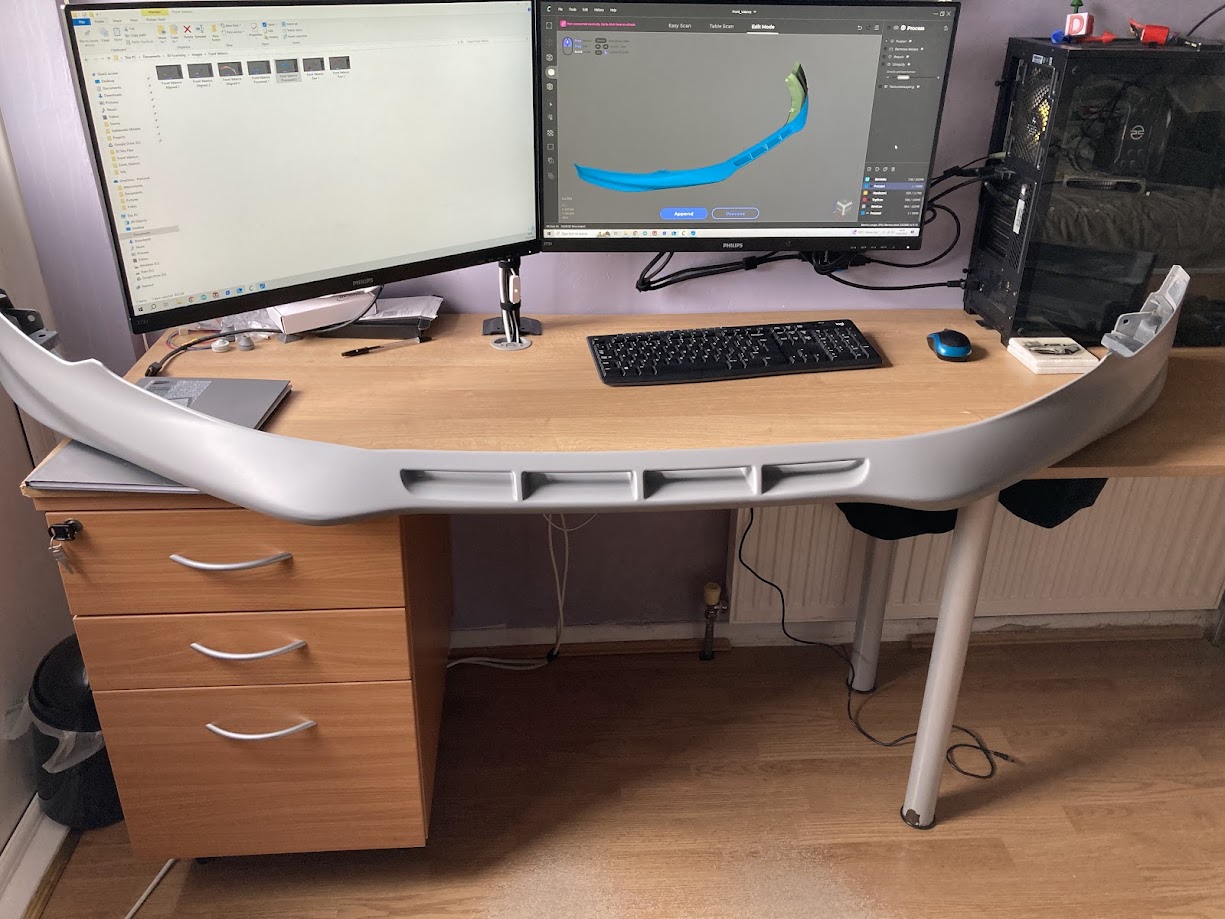
The Ford Focus is a common sight on roads around the world. The Mk3 Focus, in Zetec S trim, is equipped with a factory body kit that includes a low front splitter. Due to its low position, the splitter is easily damaged or broken when contacting curbs or road obstacles. Replacement parts are difficult to source and are not available to purchase individually from Ford. This project set out to recreate the original splitter using 3D scanning, CAD, and 3D printing—providing a practical replacement for a commonly missing part.

Daniel-Barker.com

Design
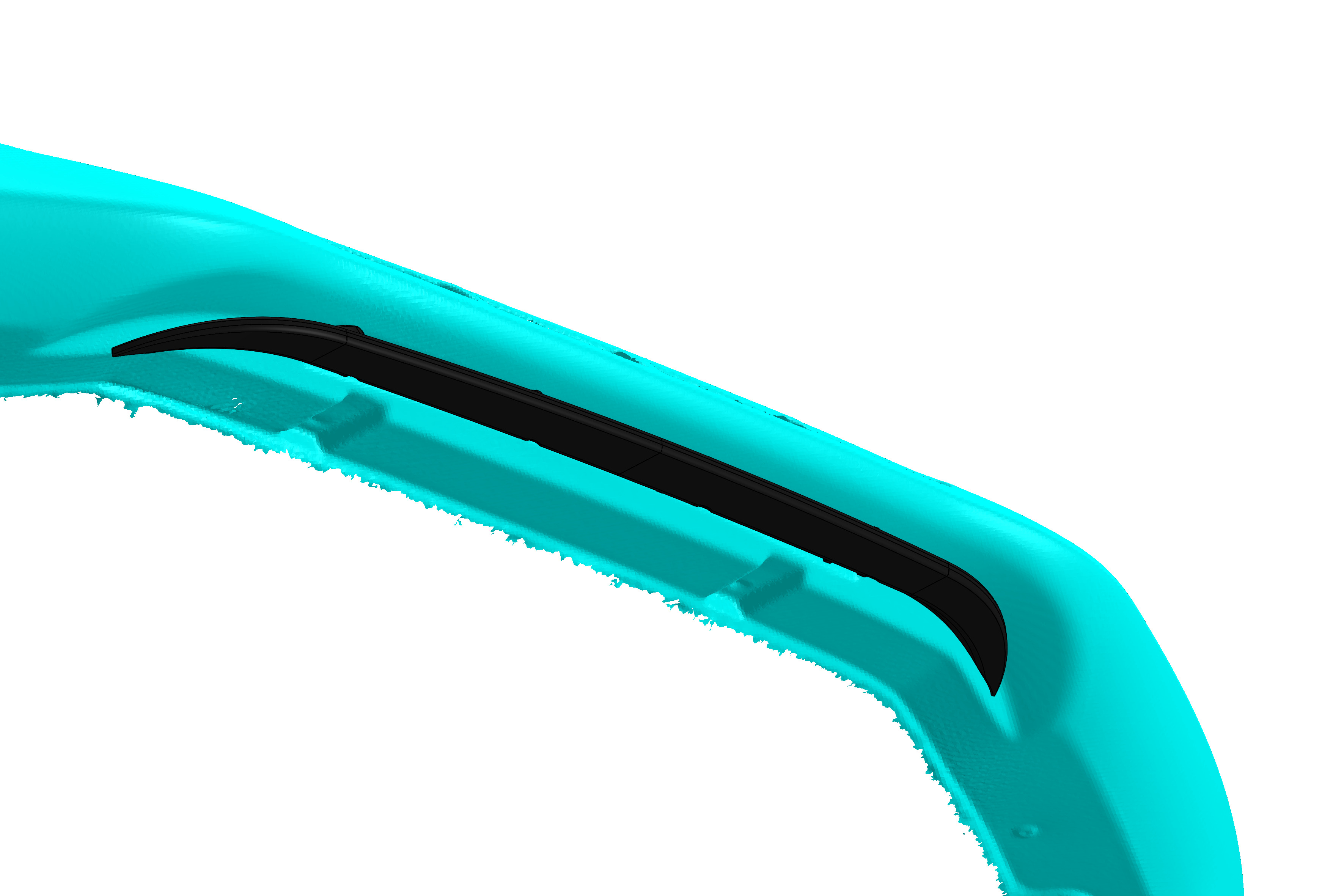
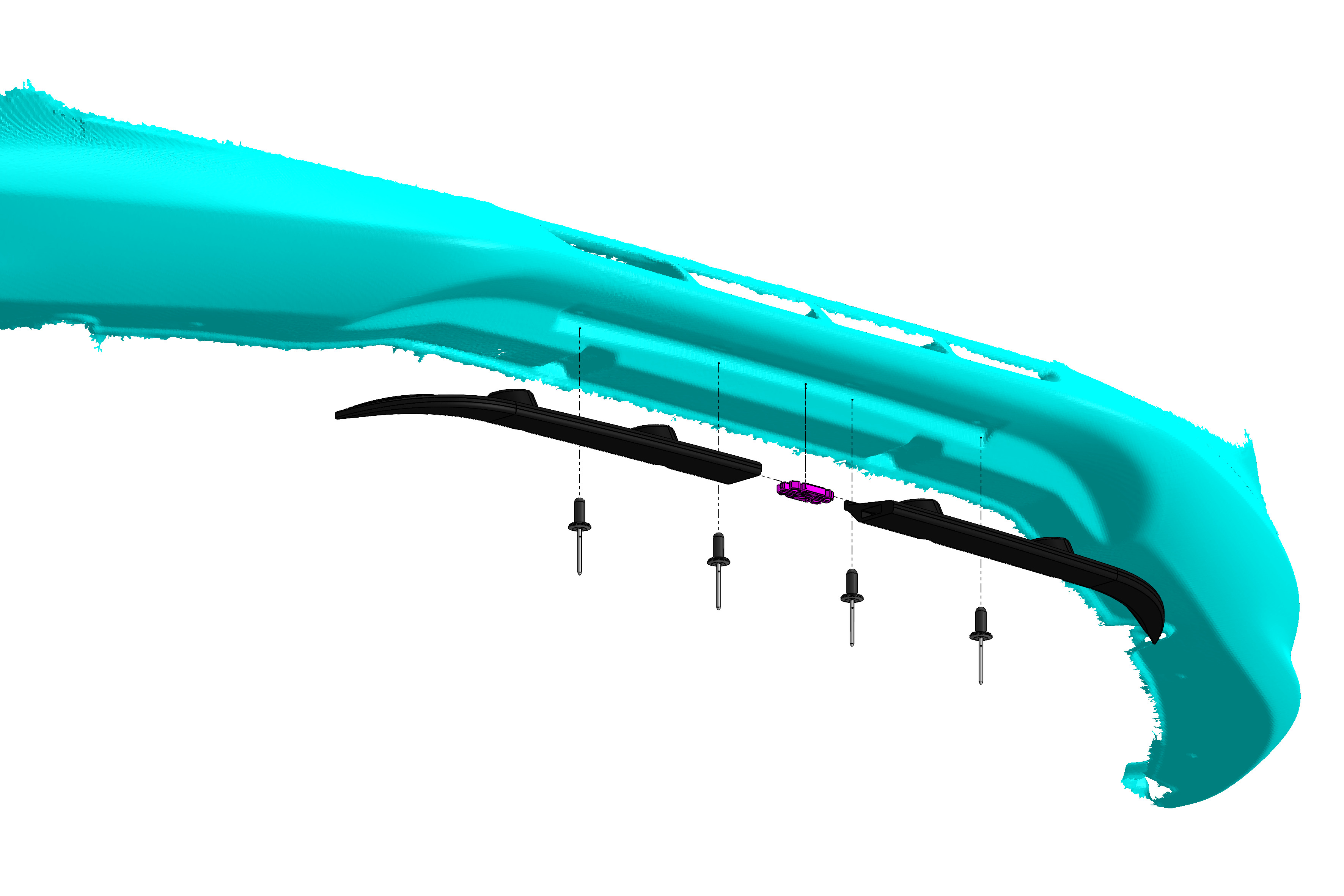
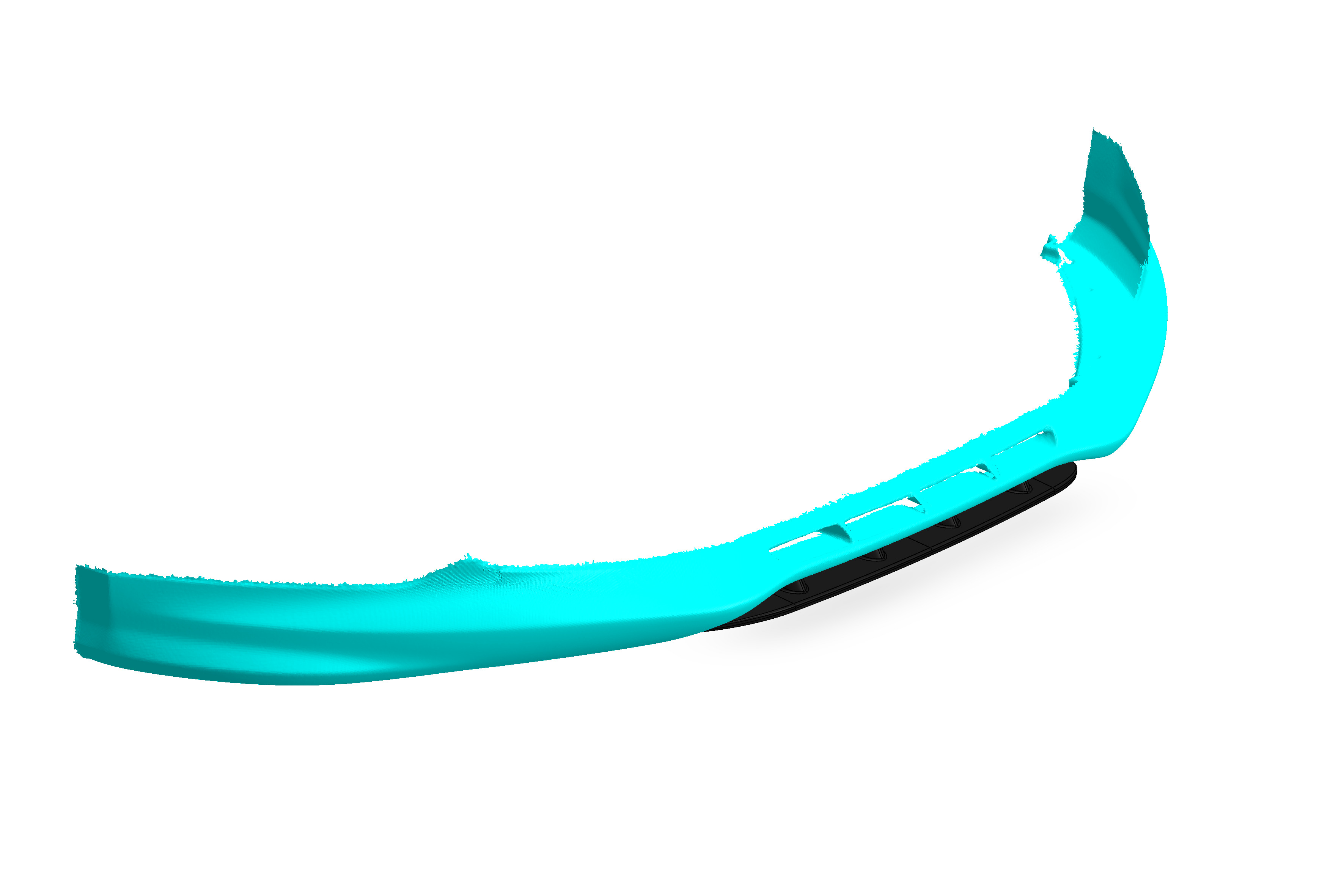
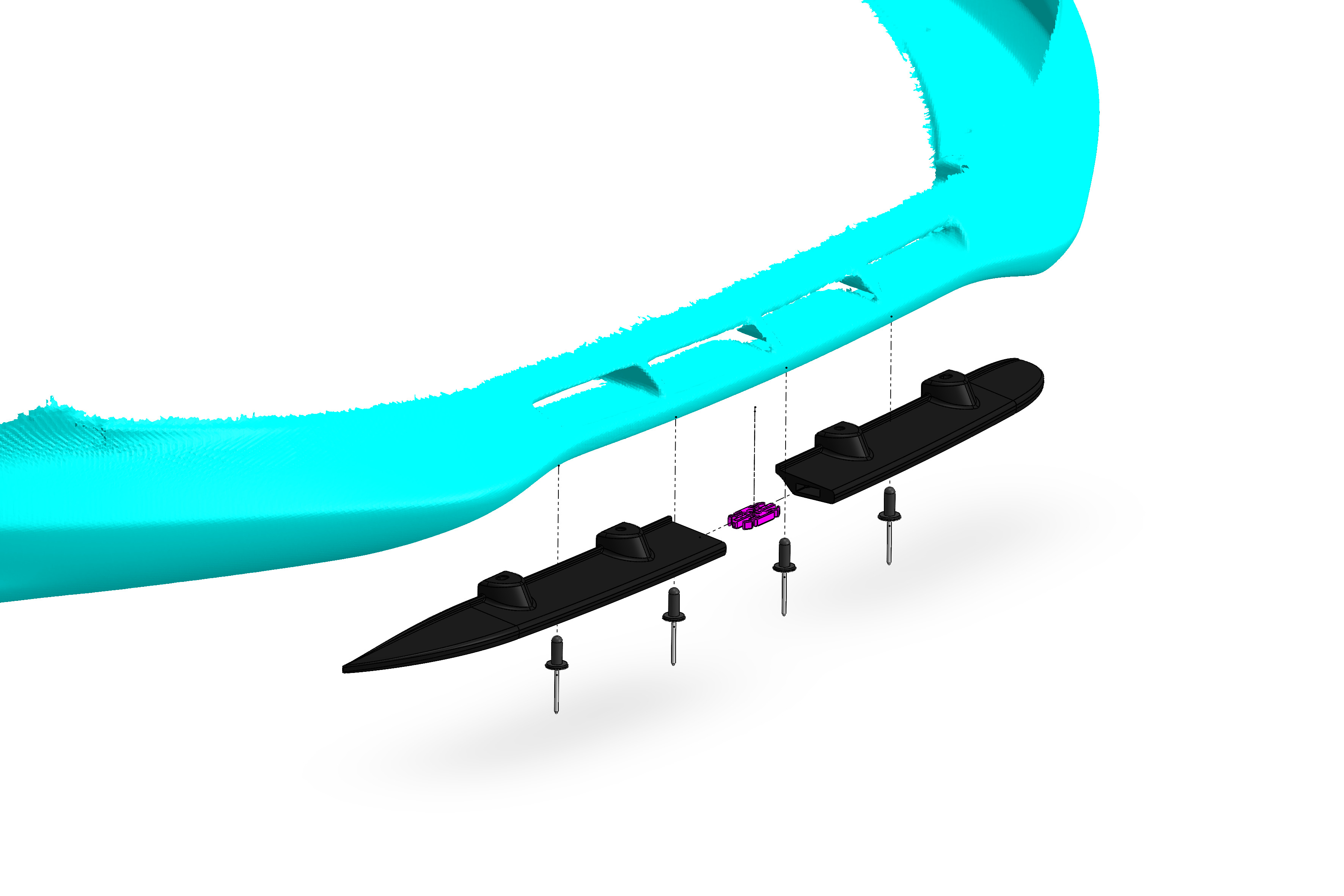
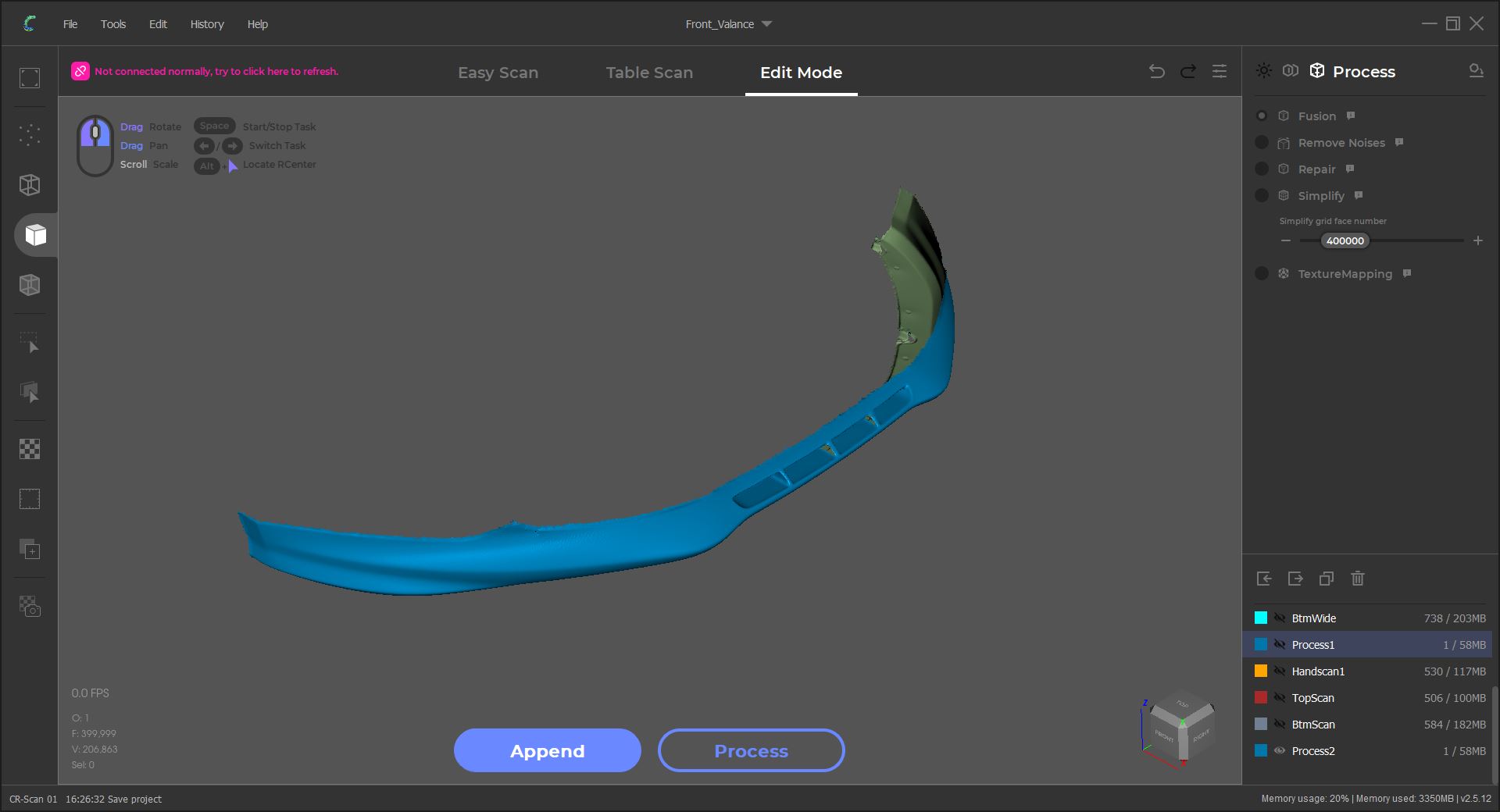
This replica front splitter was reverse-engineered and designed in SolidWorks using a 3D scan of the original front valance to ensure accurate fitment and a direct fit to the original mounting points. The splitter replicates the visible geometry of the OEM part, with additional material added in non-visible areas to improve strength and make it better suited for 3D printing. To accommodate the build volume of the 3D printer, the splitter was divided into two sections. The halves are joined using an integrated clip system, allowing for quick and straightforward assembly.
3D Printing
The parts were 3D printed on a Bambu Lab H2S using PETG, chosen for its durability and impact resistance for exterior automotive use. Manufacturing the splitter using 3D printing allows the part to be produced at relatively low cost, with no tooling costs associated with traditional injection moulding. This makes low-volume production viable and enables replacement parts to be made as needed. A range of suitable outdoor-grade materials is available, and the splitter can be produced in a variety of colours, allowing for customisation to suit individual vehicles or preferences. The naturally glossy surface finish of the printed components allows the splitter to be installed on the vehicle with no additional post-processing required.
Assembly/Installation
The two halves are joined using a push-fit clip system. This is sufficient for normal use, although a plastic adhesive may also be applied to the mating faces for additional security if desired. Installation requires no special tools and follows the same process as the original factory part. The splitter mounts directly to the original fixing points in the front valance using plastic-sleeved aluminium rivets, commonly used by the OEM to secure plastic panels and trim components.